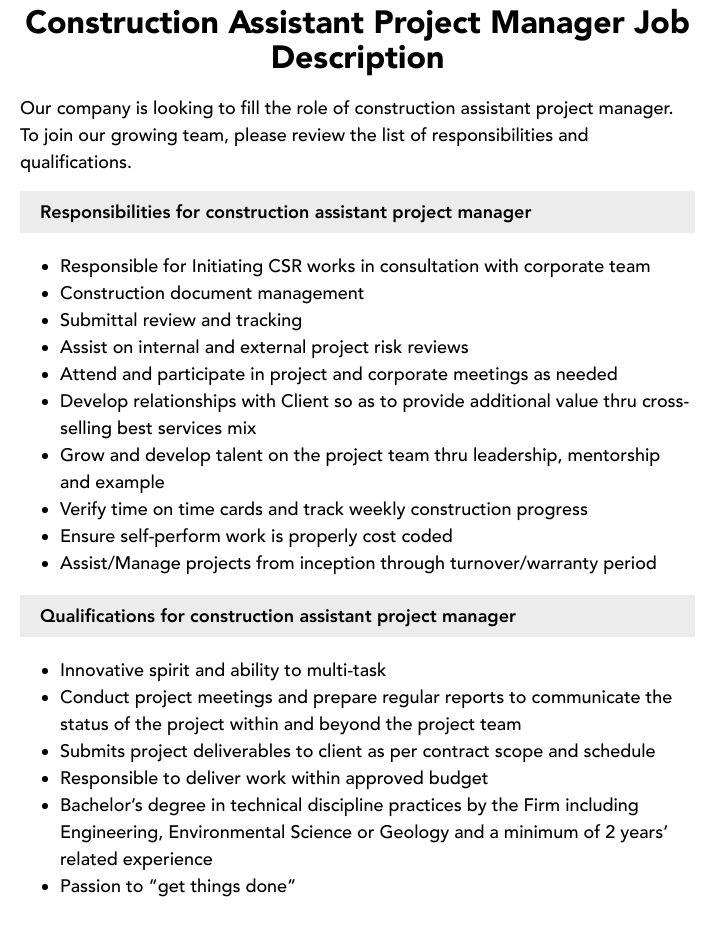


Executive summary: The Assistant Project Manager plays a pivotal role in construction management, acting as a bridge between the project manager, on-site teams, and stakeholders. In 2025, demand for capable APMs remains strong as projects grow in complexity and require meticulous planning, budgeting, and risk management. This guide outlines the typical job description, essential duties, salary expectations, qualifications, and the skills that differentiate high performers in the field.
En bref
- The Assistant Project Manager provides essential support to the project manager by coordinating project planning, team coordination, and administrative tasks.
- Key responsibilities include monitoring progress, budget management, maintaining site supervision reports, and facilitating communication skills with stakeholders.
- Typical salary for 2025 ranges from $58,000 to $112,000 per year, with an average around $78,000 depending on sector, location, and certification.
- Educational paths commonly include a bachelor’s degree in project management or business, with professional certifications like CAPM or PMP boosting career prospects.
- Career opportunities span construction and cross-industry roles where resource allocation and risk assessment are valued skills.
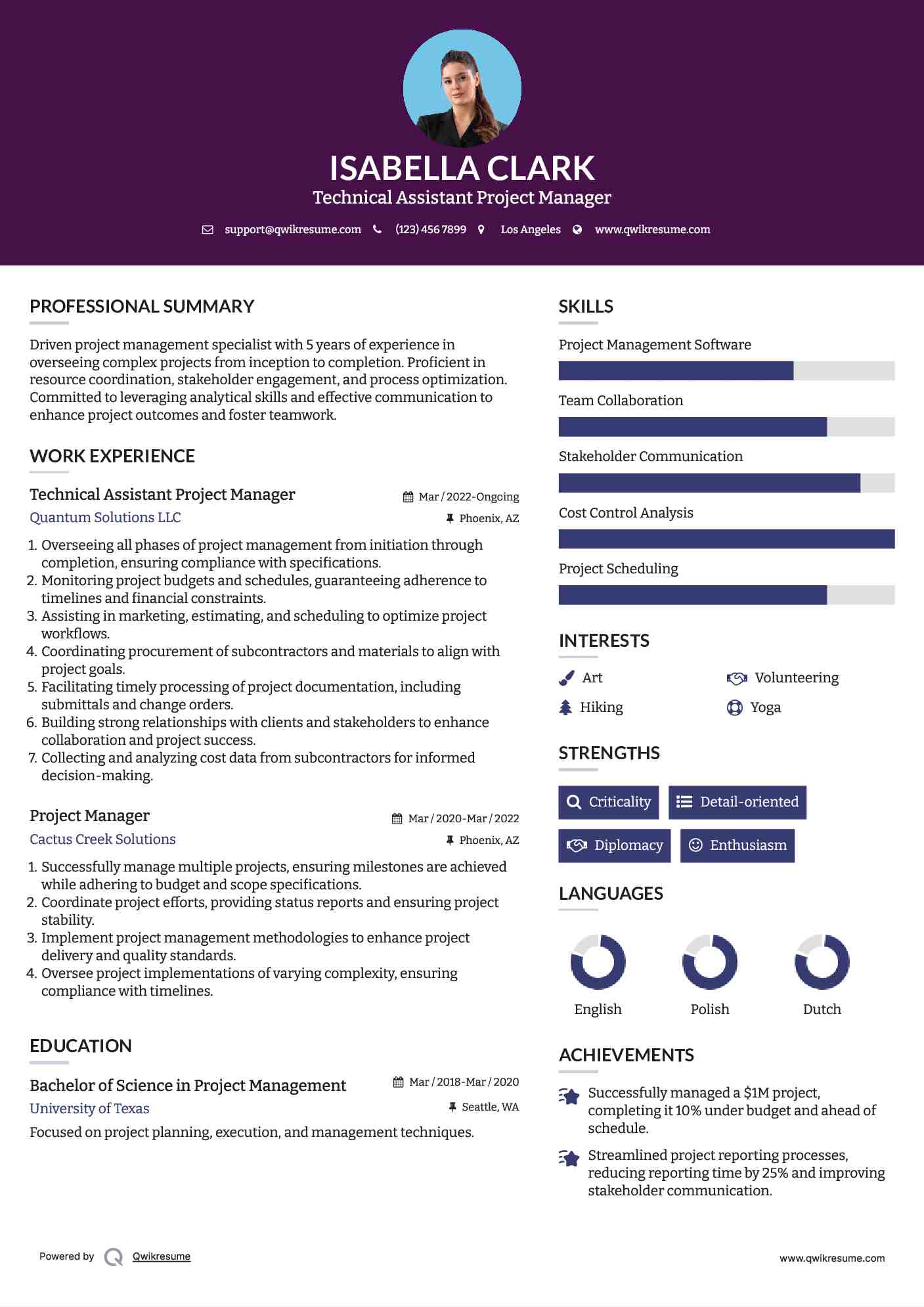
As a trusted partner to the PM, the APM ensures that every phase of the project plan aligns with scope, schedule, and budget, enabling smoother onsite execution and clearer stakeholder communication.
Assistant Project Manager in Construction Management: A Detailed Job Description
An Assistant Project Manager serves as a critical support to the Project Manager, coordinating activities, tracking progress, and maintaining comprehensive documentation. This role requires close collaboration with team members, stakeholders, and suppliers to ensure on-time delivery within budget. The APM often handles administrative tasks that free the PM to focus on strategic decisions and risk mitigation.
Core duties and responsibilities
- Monitor and report on project progress, timelines, and deliverables.
- Assist with project financials including tracking costs and processing invoices.
- Coordinate meetings between stakeholders, team members, and the project manager.
- Maintain project documentation such as plans, contracts, and reports.
- Serve as a point of contact for stakeholders to communicate project needs and goals.
- Support procurement for necessary project materials and resources.
- Identify risks and issues to be addressed by the project manager.
- Perform administrative tasks to support project execution.
| Duty | What it entails | Impact |
|---|---|---|
| Progress tracking | Regularly update schedules and milestones | Improved on-time delivery |
| Financial support | Cost tracking, invoices, and reporting | Better budget control |
| Documentation control | Versioned plans and contracts | Audit-ready records |
| Stakeholder communication | Status updates and meeting notes | Clear alignment across teams |
| Risk management | Risk register updates and mitigation tracking | Early issue resolution |
Other sector examples illustrate how the APM skill set translates beyond traditional construction, including tech-driven project lifecycles, marketing campaigns, and financial services programs where team coordination and communication skills drive results.
Salary and Qualifications
| Aspect | Details |
|---|---|
| Average salary | $78,000 per year |
| Salary range | $58,000 – $112,000 per year |
| Education | Bachelor’s degree in project management, business, or related field |
| Experience | 1–3 years in project-based or administrative support roles |
| Certifications | CAPM, PMP, Google Project Management Professional Certificate |
Essential skills and capabilities
- WBS management to break down deliverables into manageable components
- Budget tracking and variance analysis to control costs
- Action item tracking to ensure accountability
- Project documentation control with versioned files
- Stakeholder status reporting tailored to audiences
- Risk register maintenance with mitigation strategies
Qualifications and career paths
- Bachelor’s degree is the common baseline; many employers value industry-specific coursework
- CAPM or PMP certification for career advancement
- Google Project Management Professional Certificate for practical, in-demand skills
As markets evolve, the APM role increasingly sits at the intersection of operations and strategy, with opportunities to lead cross-functional initiatives and improve communication flows across sites and offices. Strengthening leadership and stakeholder management remains a differentiator for higher-responsibility tracks.
Resources et lecture approfondie
Pour étayer votre recherche et comparer les pratiques dans différents secteurs, consultez ces ressources:
- What does an assistant construction manager do
- A comprehensive guide to Hays PLC’s global recruitment services
- Understanding the key roles in agency construction jobs
- Exploring career opportunities in banking and finance
- Exploring job opportunities in New York City: what you need to know
Disclosure: this article was produced with AI assistance and fact-checked against the cited sources.