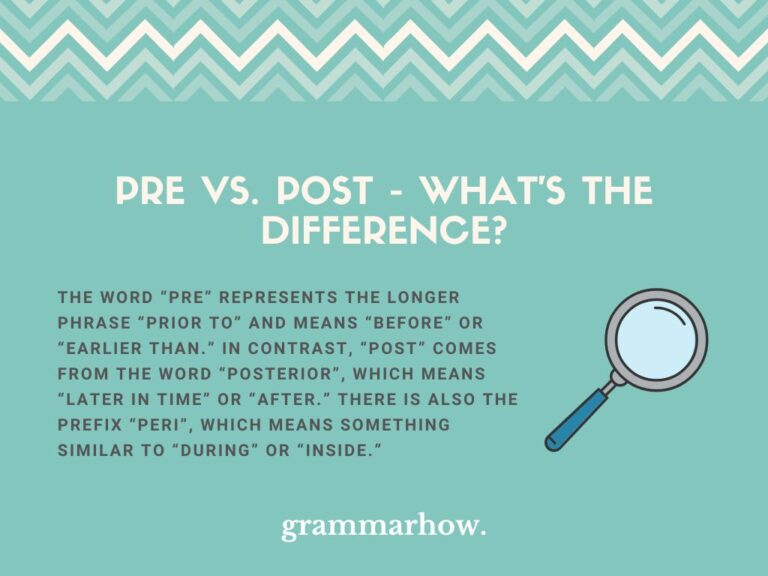
The year is 2025, and the most effective hiring strategies hinge on smart pre screening. By prioritizing candidate evaluation early, teams can pinpoint job fit and potential for growth long before the first in-person interview. A well-designed pre screening framework not only speeds up the hiring process but also enhances the experience for candidates who value clarity and respect during the early stages of recruitment.
Find practical insights and proven approaches in this guide, including evidence-backed questions, best practices, and technology-enabled tactics that streamline recruitment strategies. For additional perspectives on hiring and talent acquisition, you may explore How to hire good employees effectively and Top skills to succeed in recruiter jobs today, which contextualize the broader hiring landscape in 2025. You’ll also find guidance on selecting recruiting partners with the best recruiter agency for your hiring needs and global strategies in How an international recruitment agency can enhance your global hiring strategy.
In brief
- Time-saving by filtering out unsuitable candidates early, reducing unnecessary interviews.
- Better fit through precise screening criteria aligned with the job requirements.
- Candidate experience improves with a fast, relevant process that respects the applicant’s time.
- Evidence-based approach shows that early screening focuses on skills and experience gaps that matter most.
- 20 essential questions form a practical toolkit for fast, accurate candidate evaluation in 2025.
Pre screening interview questions to hire the best candidates
Implementing pre screening questions thoughtfully helps hiring teams identify strong candidates while preserving a positive experience for applicants. The right questions reveal skills and experience, motivation and cultural fit, and practical logistics—all of which are crucial for effective employee selection. Integrate these questions into your process to sharpen your screening criteria and align with your recruitment strategies.
- Clarify how the screening workflow reduces time-to-hire while maintaining quality.
- Balance depth and brevity to keep candidates engaged without sacrificing insight.
- Use consistent rubrics to ensure fair evaluation across applicants.
Read more about practical hiring approaches in 2025, such as How to find the best recruitment agency in Sydney and How recruitment companies can streamline your hiring process to see how external partners can complement your internal screening efforts.

20 best pre-screening questions to identify top talent in 2025
Skills and experience
Ask questions that reveal true capabilities and track record. Focus on concrete achievements rather than titles, and map responses to your job requirements.
- Which core skills do you bring that are most relevant to this role?
- How many years of experience do you have in [industry/field]?
- What certifications or technical proficiencies do you hold?
- Can you describe a project where you used [specific tool, software, or methodology]?
- Have you worked in a similar environment (e.g., startup, corporate, agency)?
| Purpose | Scoring Tip | |
|---|---|---|
| Which core skills do you bring that are most relevant to this role? | Assess alignment with required competencies. | Strong fit if multiple key skills match; note distinct achievements. |
| How many years of experience do you have in [industry/field]? | Gauge depth of experience. | Score higher for substantive roles and measurable outcomes. |
| What certifications or technical proficiencies do you hold? | Validate formal qualifications. | Prioritize role-specific credentials. |
| Describe a project where you used [tool/tech/methodology]. | See practical application. | Look for concrete results and problem-solving steps. |
| Have you worked in a similar environment? | Assess cultural adaptability. | Prefer candidates with relevant context. |
Motivation and culture fit
Understanding a candidate’s motivation helps predict long-term commitment and alignment with company values.
- Why are you interested in this role and our company?
- How does this opportunity align with your long-term career goals?
- What type of work environment helps you perform at your best?
- What are your top three factors when considering a new role? (growth, stability, innovation)
- Which of our company values resonates most with you?
| Purpose | Scoring Tip | |
|---|---|---|
| Why are you interested in this role and our company? | Assess genuine interest and research effort. | Strong interest + concrete references = high score. |
| How does this opportunity align with your long-term career goals? | Check for long-term motivation. | Consistency with role trajectory matters. |
| What type of work environment helps you perform at your best? | Culture compatibility. | Look for alignment with team norms and values. |
| Top three factors when considering a new role? | Priorities alignment. | Rank order reveals decision drivers. |
| Which of our values resonates most with you? | Values fit. | Stronger fits indicate potential cultural alignment. |
Practical and logistical
Clarify practicalities early to avoid later delays and misaligned expectations.
- What is your current notice period or availability to start?
- What are your salary expectations?
- Are you open to hybrid, remote, or fully onsite work?
- Do you have the right to work in [country of role]?
- Are you willing to relocate if necessary?
| Purpose | Scoring Tip | |
|---|---|---|
| Notice period / start date | Timeline feasibility. | Match with project timelines. |
| Salary expectations | Budget alignment. | Identify gaps early; plan negotiation strategy. |
| Work arrangement | Logistical fit. | Clarify policy and feasibility for the role. |
| Right to work | Compliance. | Verification required; avoid delays. |
| Relocation willingness | Flexibility. | Consider cost and impact on performance. |
Behavioural and problem-solving
Behavioural questions help predict future performance by examining past actions in real situations.
- Tell me about a time you had to quickly learn a new skill for a project.
- Describe a situation where you faced a challenge and how you resolved it.
- How do you prioritise tasks when facing tight deadlines?
- How do you prefer to receive feedback?
- Describe a project where you worked as part of a team. What was your role?
| Purpose | Scoring Tip | |
|---|---|---|
| Quickly learn a new skill | Assess adaptability and learning agility. | Look for rapid competency gains and transferability. |
| Describe a challenge and resolution | Coachability and problem-solving. | Identify clear steps, collaboration, and impact. |
| Prioritize under deadlines | Time management. | Evaluate method and prioritization logic. |
| Feedback preferences | Growth mindset. | Openness to feedback and iterative improvement. |
| Team project role | Collaboration and contribution. | Highlight teamwork and measurable outcomes. |
Effectively using these questions requires streamlined processes and a consistent rubric. Combine open-ended prompts with targeted follow-ups to uncover depth and nuance, rather than relying on generic answers. For broader guidance on recruitment strategies and candidate assessment, you can also explore how recruiting agencies streamline your hiring and the best recruiter agency for your needs.
Red flags to watch for
- Vague or generic answers that lack specifics.
- Inconsistent career goals or frequent job-hopping without progression.
- Salary expectations far from your budget.
- Reluctance to share availability or start date.
Technology can support pre screening with automated questionnaires, video responses, and AI-powered keyword matching. Yet human review remains essential to interpret context and to validate nuances that algorithms may miss. For a broader perspective on technology-enabled hiring, see streamlining with recruitment tech and agency-assisted streamlining.
Streamlining pre-screening with technology
Digital tools can accelerate candidate evaluation while preserving fairness and accuracy. With ATS, automated questionnaires, video screening, and AI-powered keyword matching, recruiters can filter for high-potential applicants efficiently. Always couple automation with human judgment to interpret responses in context and avoid overreliance on superficial signals.
- Automated questionnaires aligned with job-specific screening criteria.
- Video screening for concise responses and non-verbal cues.
- AI-based keyword matching to surface top candidates quickly.
| Benefit | Considerations | |
|---|---|---|
| Applicant Tracking System (ATS) | Centralizes screening data and workflows. | Ensure integration with other HR systems. |
| Automated questionnaires | Standardizes responses for fair comparison. | Balance automation with open-ended prompts. |
| Video screening | Efficient initial assessments and cultural signals. | Be mindful of accessibility and bias mitigation. |
| AI keyword matching | Rapid filtering of high-potential profiles. | Set transparent criteria to avoid discrimination. |
Learn more about selecting the right recruitment partners to optimize your hiring pipeline, for instance choosing the right recruitment agency for Dubai job seekers and international recruitment for global hiring strategy. These resources illustrate how technology, process design, and partner selection come together to improve employee selection and overall hiring process efficiency.
Smarter screening leads to smarter hiring
When pre screening is well-designed, recruiters save hours of interview time, improve the candidate experience, and build teams that are more closely aligned with business goals. The 2025 landscape confirms that screening criteria drive better outcomes, and early questions help you forecast post-hire performance with greater accuracy. For broader context on refining your approach, consider how recruitment companies can streamline your hiring process.
En bref – clé du pré screening efficace
- Precise screening criteria tailored to the role boost accuracy.
- A balanced mix of open-ended and structured questions improves candidate evaluation.
- Technology accelerates screening, but human judgment remains essential.
- Clear timelines and realistic expectations prevent bottlenecks in the hiring process.
- Partner selection matters; align with agencies that complement your screening approach.
Further reading and practical examples can be found in related articles such as Sydney recruitment best practices and best recruiter agency for your hiring needs, which illustrate how talent acquisition strategies translate into effective candidate assessment and improved employee selection outcomes.
Disclosure: this article was produced with AI assistance and fact-checked against the cited sources.