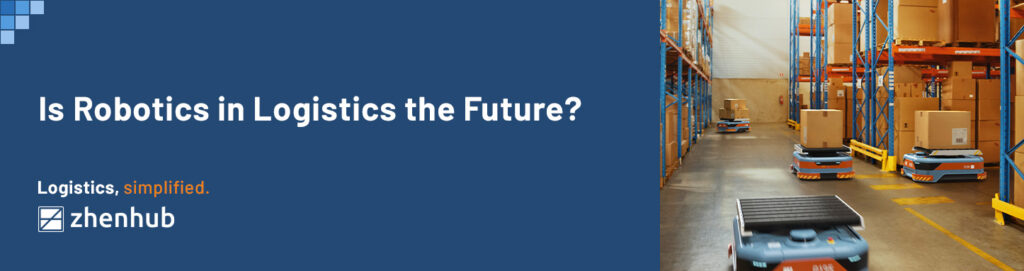
In 2025, robotics is redefining how logistics companies design, operate, and optimize every link of the supply chain. From intelligent warehouse automation to autonomous drones delivering parcels in dense urban environments, the convergence of robotics, automation, and artificial intelligence is lifting efficiency, accuracy, and sustainability to unprecedented levels. Organizations are shifting away from purely human-driven processes to collaborative ecosystems where robots handle repetitive, heavy, and precision-based tasks, while people focus on decision-making, problem-solving, and customer experience. This transformation is not just about cost reduction; it’s about resilience—ensuring smoother peak-season performance, better inventory control, and safer workplaces. As the technology matures, the talent landscape is also evolving, creating new career paths in robotics maintenance, AI-driven optimization, and deployment program management that require fresh skills and continuous learning. The momentum is global: pilot programs, scaled installations, and cross-functional adoption across warehouses, distribution centers, and transport hubs are becoming the norm rather than the exception. The result is a logistics industry that moves faster, smarter, and more sustainably than ever before.


- Robotics and drones are accelerating order fulfillment and delivery processes.
- Automation reduces manual handling, increasing accuracy and throughput.
- Artificial intelligence powers route optimization and demand forecasting.
- Inventory management becomes near real-time, lowering stockouts and overstock.
How Robotics Is Transforming Logistics Operations: Key Trends Driving Efficiency and Resilience
Robotics in logistics is advancing through a blend of autonomous navigation, advanced manipulation, and AI-enabled decision-making. Autonomous mobile robots (AMRs) and robotic process automation (RPA) are streamlining warehouse workflows, while drones extend reach for last-mile delivery and inventory checks. This section delves into the core trends shaping the industry, highlighting practical applications, measurable benefits, and real-world deployments that demonstrate how robotics is enhancing supply chain performance across sectors.
| Technology | Primary Logistics Applications | Key Benefits | Representative Examples |
|---|---|---|---|
| Autonomous Mobile Robots (AMRs) | Picking, packing, sortation, and internal transportation | Higher throughput, improved accuracy, safer material handling | Warehouses using AMRs to assist human pickers and automate routing |
| Robotic Process Automation (RPA) | Inventory reconciliation, order processing, invoicing | Faster back-office operations, reduced human error | ERP-integrated bots handling repetitive administrative tasks |
| Inventory Management Sensors | Real-time stock tracking, cycle counting | Improved visibility, lower stockouts, data-driven replenishment | Automated shelf auditing and barcode-less scanning with vision systems |
| Robotics in Last-Mile Logistics | Middle-mile consolidation, final handoff, automation in sorting hubs | Faster deliveries, reliable service levels | Automated packing lines and robotic sortation in urban facilities |
Robotics in Logistics: Driving Efficiency Across the Supply Chain
Autonomous systems are redefining how work is done in logistics. The integration of AMRs and vision-enabled robotic arms helps teams scale operations to meet demand spikes, such as Black Friday. This shift not only speeds up processing times but also reduces human error, creating safer and more productive environments for warehouse staff.
- AMRs navigate warehouses independently, adapting to layout changes and peak volumes.
- Vision systems and tactile grippers improve picking accuracy for high-value items.
- Shared control models allow humans and machines to collaborate seamlessly.
To illustrate the broader trend, consider how DHL has expanded robotics across its facilities to boost productivity. In contrast, a Dubai-based online food service is exploring AI and drones for deliveries, emphasizing that human interaction remains a critical element in customer experience even as automation grows.
Next-Generation Technologies: Drones and AI
Beyond the warehouse floor, drones and artificial intelligence are tackling last-mile challenges and optimizing network-level decision making. Drones offer a practical response to traffic congestion and urban density, enabling quicker, contactless deliveries in suitable zones. AI complements this by predicting demand, optimizing routing, and enabling dynamic reallocation of resources. The combination of robotics with AI creates a feedback loop: better data leads to smarter automation, which in turn generates more accurate data for planning future operations.
- Drones enable faster last-mile delivery in cities with constrained road networks.
- AI enhances route optimization, demand forecasting, and inventory planning.
- Integrated systems support dynamic capacity planning during peak seasons and disruptions.
| Technology | Logistics Applications | Operational Benefits | Notes |
|---|---|---|---|
| Drones | Last-mile delivery, inventory checks, urgent replenishment | Reduced delivery times, less road traffic impact | Urban airspace regulations shape deployment |
| Artificial Intelligence | Routing, demand forecasting, capacity planning | Lower costs, higher service levels, better utilization | Models improve with continuous data |
In practice, AI-driven routing and drone-enabled last-mile strategies are being piloted by several operators to reduce cycle times and minimize emissions. The synergy between robotics and AI enables more resilient networks that can adapt to disruptions, from weather events to sudden demand surges. This is crucial for maintaining service levels in a competitive logistics landscape where customers increasingly expect speed and reliability.
Case Studies: Leading Companies Embracing Robotics
Major players are publicly sharing how robotics investments improve throughput and accuracy in real-world settings. For instance, DHL has deployed robotics extensively across warehouses to handle heavy and repetitive tasks, freeing staff to focus on higher-value activities. In another example, a Dubai-based online food platform is experimenting with AI-enabled drones for deliveries, highlighting the balance between automation and essential human elements in service delivery.
- DHL uses robotics to automate picking, packing, and sorting, boosting warehouse efficiency.
- Dubai online service explores AI and drones to enhance delivery speed while preserving customer experience.
- Energy and sustainability benefits arise from streamlined processes and reduced idle times.
| Company | Focus Area | Outcome | Notes |
|---|---|---|---|
| DHL | Warehouse robotics, automation of heavy tasks | Increased throughput and accuracy; improved safety | Scalable across multiple facilities |
| Dubai-based food platform | AI-enabled drones for last-mile delivery | Faster delivery with emphasis on customer experience | Regulatory considerations influence deployment |
In the broader sustainability narrative, automation—tied to robotics and AI—helps reduce energy consumption, optimize space, and lower the carbon footprint of logistics networks. The ongoing integration of these technologies is setting new benchmarks for responsible, efficient, and scalable supply chains that can adapt to evolving consumer expectations and regulatory landscapes.
Career Paths in Robotic-Driven Logistics: How to Prepare
As robotics, automation, and AI become foundational to logistics, professionals who blend technical know-how with operational insight are in high demand. This is a prime moment for candidates to reposition themselves for roles that bridge engineering, data science, and supply chain management.
- Roles to consider: Warehouse Automation Technician, Robotics Maintenance Engineer, Automation Project Manager, AI-driven Optimization Analyst, AMR System Integrator, Drone Operations Specialist.
- Core skills: robotics maintenance, systems integration, inventory management, data analytics, process improvement, change management, safety compliance.
- Learning paths: hands-on certifications in robotics, AI/ML fundamentals, PLC programming, ROS (Robot Operating System), and SAP/ERP integration.
| Job Role | Core Skills | Typical Industry Focus | Recommended Training |
|---|---|---|---|
| Warehouse Automation Technician | AMR maintenance, sensor calibration, safety testing | Retail, 3PL, manufacturing | Robotics certification, PLC basics, safety standards |
| Automation Project Manager | System integration, vendor management, budgeting | Global logistics networks | PM certification, change management, data-driven decision-making |
| AI-Driven Optimization Analyst | Data modeling, forecasting, optimization algorithms | Warehousing and transportation planning | Data science fundamentals, Python/R, operations research |
For job seekers, the path is clear: gain hands-on exposure to automation environments, develop a blend of technical and operational capabilities, and stay current with evolving standards in robotics, RPA, and drone operations. The shift toward collaborative human–machine work environments also means soft skills—communication, collaboration, and adaptability—are more important than ever, helping you navigate multi-functional teams and complex deployment programs.
In summary, 2025 presents a pivotal moment for career growth in logistics driven by robotics, automation, and AI. By building cross-disciplinary skills and pursuing hands-on experience in warehouse automation, RPA, and last-mile technologies, candidates can position themselves at the forefront of a rapidly evolving field.
Disclosure: this article was produced with AI assistance and fact-checked against the cited sources.