
In Brief: Why Are So Many Companies Moving to Texas in 2025?
- Company relocation momentum persists as Texas offers tax benefits and a pro-business climate.
- A growing Texas job market and a deep workforce availability attract both established players and startups.
- Lower cost of living and competitive real estate costs support robust corporate expansion.
- Strategic logistics and access to international trade routes fuel business migration beyond traditional hubs.
- Targeted economic incentives and a vibrant Texas economy create a favorable backdrop for sustained growth.






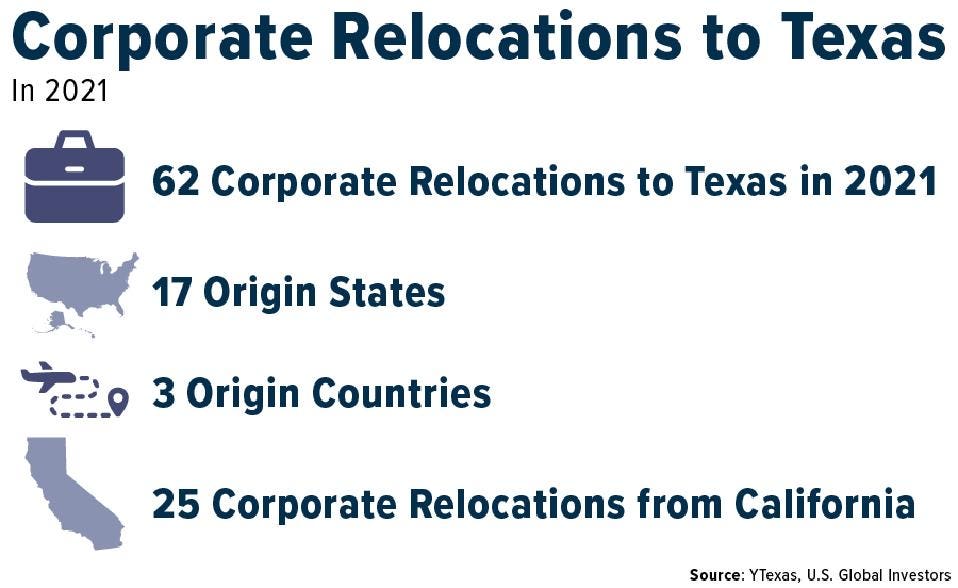
Across 2024 and 2025, Texas has solidified its status as a leading destination for company relocation and business migration. The state combines a friendly tax framework, a growing and diverse workforce, affordable real estate, and a logistics backbone that spans coast-to-coast. This article explores the key drivers, the sectors driving the move, and practical considerations for 2025, with a focus on how the Texas economy supports corporate expansion across industries.
For a quick visual overview of the forces shaping relocation, view this explainer on state incentives, talent pipelines, and market dynamics.
Why Texas in 2025: The Drivers Behind the Corporate Relocation Wave
Texas stands out due to a combination of tax structure, lower operating costs, and a broad, skilled talent pool. While there is no state personal income tax, businesses should be aware of the franchise tax regime that applies to certain entities. The state’s real estate and wage dynamics, coupled with strategic logistics, create a compelling platform for company relocation and ongoing business migration.
- Tax environment that emphasizes tax benefits and cash flow advantages for both companies and employees.
- Lower cost of living and office-space costs compared with coastal hubs, enabling competitive compensation packages.
- Robust workforce availability centered in major metros like Austin, Dallas, and Houston, supported by top universities and active migration.
- Central time zone and integrated logistics—airports, seaports, and a dense interstate network support rapid nationwide distribution.
- Pro-business climate with incentives and a history of favorable regulatory practices that support corporate expansion.
- Active tech, manufacturing, finance, and energy sectors that create a dense ecosystem for collaboration and growth.
| Factor | Texas | California | New York |
|---|---|---|---|
| Personal income tax | No state personal income tax | Top rate up to 13.3% | Top rate around 10.9% |
| Corporate framework | No traditional corporate income tax; franchise/margin tax applies to some businesses | Corporate income tax up to ~8.84% | Corporate taxes vary by entity and locality |
| Office/real estate costs | ~$30–$55 per sq ft per year (varies by city) | ~$75–$100 per sq ft per year | ~$80–$120 per sq ft per year |
| Housing costs (median) | Lower than coastal metros | Significantly higher | Higher than many inland markets |
| Job market / talent access | Broad growth across tech, energy, healthcare | Large talent pools with high cost of living | Dense urban hubs with high competition for talent |
Texas Advantages for Company Relocation and Business Migration
Several structural elements make Texas attractive for business migration and corporate expansion. The combination of tax benefits, a lower cost of living, and decisive logistical advantages translates into tangible competitive advantages for firms relocating or expanding their footprint in 2025.
- No state personal income tax paired with a thoughtful franchise tax framework supports favorable cash flow for employees and firms.
- Lower cost of living and office-space costs free up budget for strategic hires and growth investments.
- Growing workforce availability driven by major universities (e.g., UT Austin, Rice, Texas A&M) and inbound talent from other states.
- Central logistics advantages, including major international airports, busy seaports, and a large highway network, enable coast-to-coast reach.
- Pro-business policies and incentives (tax incentives, grants, workforce training) support economic incentives and swift integration for relocating teams.
- Quality of life in cities like Austin, Dallas, and Houston attracts and retains top talent while maintaining an affordable cost of living.
| Incentive Snapshot | What it Offers | Impact on Relocation |
|---|---|---|
| Texas Enterprise Fund | Grants to support job creation and capital investment | Significantly lowers initial scale-up costs and accelerates start-up timelines |
| Right-to-Work Laws | Employment flexibility for employers and staff | Streamlines hiring and workforce planning during relocation |
| Infrastructure and Trade Facilitation | Investments in transport, ports, and cross-border trade | Consumes less cycle time for supply chains and distribution networks |
| Workforce Training Programs | State-supported programs to upskill employees | Reduces time-to-productivity for relocated teams |
Industries Leading the Move: Where Relocation Is Most Active
Texas is attracting momentum across multiple sectors, with notable clusters in technology, manufacturing, energy, and financial services. The convergence of cost advantages, talent access, and regional scale is reshaping where and how companies invest for the long term.
- Technology and innovation hubs, led by Austin and Dallas, drawing major expansions from global players.
- Manufacturing and logistics, leveraging Texas’ access to Gulf ports and the Mexico border for cross-border trade.
- Finance, energy, and healthcare—traditional strengths complemented by growing fintech and green energy initiatives.
- Digital marketing and SEO services expanding to Texas to stay close to client portfolios and capture regional growth.
| Relocation Spotlight | Sector | City / Corridor | Notable Moves |
|---|---|---|---|
| Tesla | Technology / Automotive | Austin | HQ relocation from Palo Alto; major campus expansion |
| Oracle | Software / Cloud | Austin | HQ prime relocation and growth of engineering teams |
| Toyota North America | Automotive / Manufacturing | Plano | Expanded U.S. operations and regional presence |
| Charles Schwab | Financial Services | Westlake | Significant footprint and job growth |
| CBRE | Real Estate | Dallas | Strategic relocation to support clients and growth |
Technology and Innovation Hubs
- Austin is a magnet for scalable tech, with major campus expansions and vibrant VC activity.
- Dallas and Houston are expanding data centers, cyber security startups, and enterprise software.
- VC investments in Texas tech exceeded notable benchmarks in recent years, fueling economic incentives for quick scale-ups.
Manufacturing and Logistics
- Proximity to the U.S.–Mexico border and Gulf Coast ports strengthens cross-border trade and supply chains.
- Large tracts of affordable industrial land support plant expansions and distribution networks.
- Texas-based manufacturers are broadening footprints in semiconductors, electronics, and consumer goods.
Finance, Energy, and Healthcare
- Dallas and Houston host expanding banks, insurance, and fintech players seeking regional hubs.
- Houston leads in energy with wind and solar investments alongside traditional oil & gas activities.
- Healthcare innovation and hospital networks are expanding research, technology adoption, and patient care capabilities.
| Industry Relocation Summary | City Focus | Key Drivers | Outlook for 2025 |
|---|---|---|---|
| Tech & MarTech | Austin & Dallas | Talent pools, price leverage, incentives | Sustained expansion; more campus builds |
| Manufacturing & Logistics | Dallas–Fort Worth corridor, Houston area | Border access, ports, land | Rising throughput; more distribution centers |
| Finance & FinTech | Dallas | Regulatory clarity, cost efficiency | Growing ecosystem and talent magnet |
| Energy & Healthcare | Houston, San Antonio | R&D, digital health, renewables | Innovation centers and partnerships expanding |
Challenges and Considerations for 2025 Texas Relocation
Despite strong fundamentals, firms considering relocation should plan for a mix of opportunities and challenges. The Texas market remains competitive, and scale requires deliberate strategy around talent, infrastructure, and culture. Proactive planning can help mitigate risks and accelerate the benefits of relocation.
- Infrastructure and traffic pressures in fast-growing cities require coordinated planning and timing.
- Power grid reliability and energy resilience are ongoing concerns that demand redundancy and contingency planning.
- Competition for high-skilled talent is intensifying; employers may need to invest in compensation, relocation support, and training programs.
- Housing affordability for new hires must be managed with housing allowances, commuter options, and community partnerships.
- Cultural alignment and local community integration become important for employee retention in new markets.
- Regulatory updates and permitting timelines can affect project schedules; proactive government engagement helps maintain momentum.
| Risks | Mitigations | Impact on relocation timeline |
|---|---|---|
| Infrastructure strain | Coordinate with local and state agencies; staggered hiring and site planning | Reduces project delays; smoother ramp-up |
| Power reliability | Invest in backup generation and smart-grid readiness | Improves uptime for operations and data centers |
| Talent competition | Upskill programs, remote/hybrid options, and relocation support | Quicker talent acquisition and retention |
| Real estate costs rising | Long-term lease planning, alternative submarkets, mixed-use spaces | Stabilizes occupancy costs over time |
For recruiters and executives, the core takeaway is clear: Texas offers a compelling platform for company relocation with strong upside if plans account for infrastructure, talent, and community integration. The momentum points toward sustained expansion across multiple sectors, driven by practical incentives and a growing Texas economy.
Key sources and further reading include the Texas Economic Development Corporation and independent market analyses. Access to credible data helps ensure informed decisions about real estate Texas, workforce availability, and long-term strategic planning.
Would you like a tailored map of relocation options by industry and city in Texas, focusing on your specific budget, talent needs, and timeline?
Note: This overview reflects 2025 dynamics and is intended to guide strategic planning for economic incentives, cost of living, and real estate Texas considerations during a period of rapid corporate migration.
Sources and further reading:
- Texas Economic Development Corporation: industry and incentive data
- CBRE Tech Talent Report 2024: Austin and Dallas growth
- U.S. BEA and state data on GDP by state and sector
- Texas Workforce Commission and regional workforce trends
- Tax Foundation and state tax policy comparisons
Disclosure: this article was produced with AI assistance and fact-checked against the cited sources.