






Opening overview
In 2025, the landscape of law remains vibrant and specialized, guiding how individuals, businesses, and governments interact. This guide breaks down the main legal categories and essential fields, shedding light on how each branch functions, where it applies, and what careers or everyday decisions it informs. From Civil Law and Criminal Law to Administrative and International Law, understanding these categories helps anyone navigate rights, duties, and remedies with greater clarity. The goal is to provide practical explanations, concrete examples, and pointers to credible sources so that readers can make informed decisions—whether pursuing a legal career, drafting a contract, or resolving a civil dispute.
En bref
- Major branches: Civil Law, Criminal Law, Constitutional Law, Administrative Law, International Law.
- Key specializations include Corporate Law, Family Law, Intellectual Property Law, Environmental Law, and Health Law.
- Understanding these categories helps in choosing a career path, preparing for exams, or navigating legal challenges in daily life.
For a deeper, beginner-friendly overview, see Fields of Law explained, Comprehensive guide for beginners, Beginner’s overview of law fields, Understanding main legal categories, and Law types explained for newcomers.
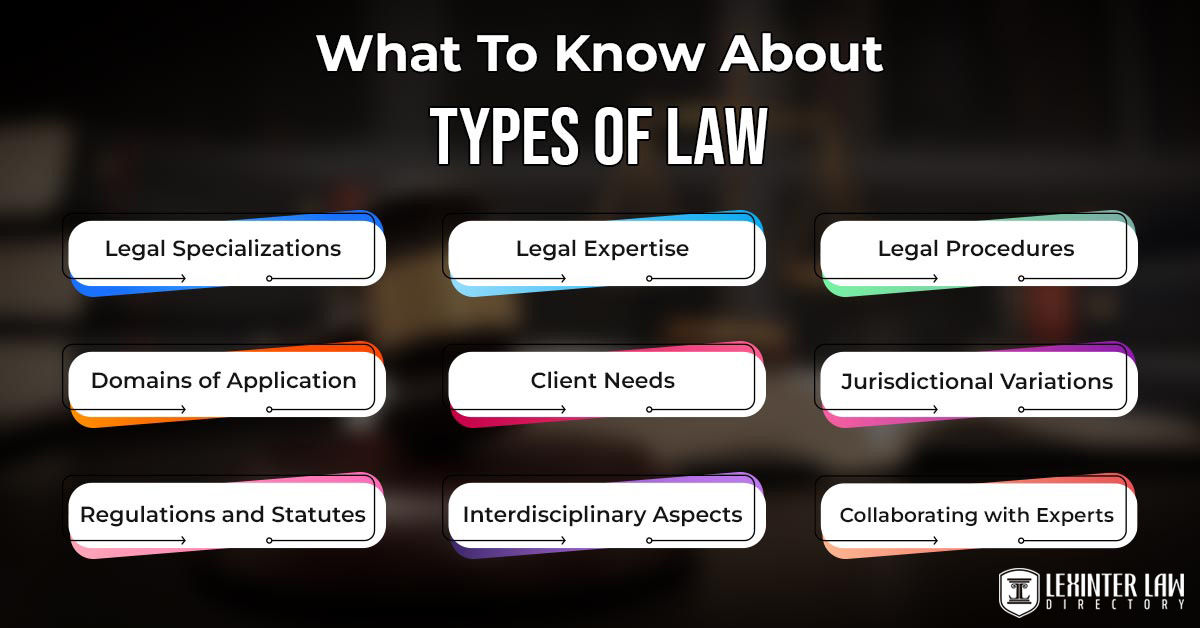
Branches of Law: Civil, Criminal, Constitutional, Administrative, International
The law system is organized into broad branches, each serving distinct purposes—from resolving disputes to protecting rights and guiding governance. This section presents the five core branches and highlights where they apply in real life.
- Civil Law covers disputes between private parties, including contracts, property, family matters, and torts. It seeks compensation or remedies for harm outside of criminal blame. For example, a contract dispute or a homeowner’s property claim would fall under civil law.
- Criminal Law deals with offenses against the state or society, aiming to deter wrongdoing and rehabilitate offenders. Penalties may include fines or imprisonment, with prosecutors pursuing guilt “beyond a reasonable doubt.”
- Constitutional Law concerns the structure of government and the protection of fundamental rights, including judicial review of laws and executive actions.
- Administrative Law governs how government agencies operate, issue licenses, and regulate activities, ensuring procedural fairness and proper authority.
- International Law regulates relations between states and international actors, covering treaties, human rights, trade, and environmental cooperation.
| Branch | Primary Focus | Key Features | Representative Fields |
|---|---|---|---|
| Civil Law | Private disputes and remedies | Contracts, property, family, torts; civil procedure | Contracts, Property Law, Tort Law, Family Law |
| Criminal Law | Offenses against the state or society | Deterrence, punishment, rehabilitation; burden of proof | Criminal Law, Criminal Procedure |
| Constitutional Law | Foundations of government and rights | Judicial review, constitutional interpretation | Constitutional Law |
| Administrative Law | Regulation and governance of agencies | Licensing, rulemaking, adjudication | Administrative Law, Regulatory Law |
| International Law | Relations between states and international actors | Treaties, customary law, arbitration | Public International Law, Trade Law |
Further reading and credibility
To better understand how these branches shape real-world outcomes, consider exploring foundational texts and official sources cited by legal scholars and practitioners. For an accessible overview, see the beginner’s guide linked above.
Law Specializations and Career Pathways
Beyond broad branches, the legal field offers targeted specializations that align with industry needs and personal interests. The following areas are among the most in-demand and dynamic in 2025, reflecting ongoing globalization, innovation, and social change.
- Corporate Law focuses on business governance, mergers and acquisitions, and compliance across jurisdictions. It supports corporate decision-making, investor protection, and risk management.
- Family Law covers marriage, divorce, child custody, and related matters, prioritizing the welfare of children and fairness in property division.
- Environmental Law enforces rules on pollution, land use, and sustainable development to safeguard ecosystems.
- Intellectual Property Law protects inventions, works of authorship, and brands, fueling innovation and economic growth.
- Health Law governs medical practice, patient rights, and healthcare policy, balancing access, quality, and safety.
| Specialization | Area of Focus | Typical Roles | Key Legislation/Principles |
|---|---|---|---|
| Corporate Law | Governance, finance, compliance | Corporate counsel, M&A advisor, compliance officer | Company law, securities regulation, fiduciary duties |
| Family Law | Family relationships, custody, support | Family lawyer, mediator, child welfare advocate | Family Code, child protection statutes |
| Environmental Law | Pollution control, conservation, land use | Regulatory attorney, compliance auditor, NGO advisor | Environmental statutes, international treaties |
| Intellectual Property Law | Patents, copyrights, trademarks, trade secrets | IP attorney, licensing negotiator, IP litigator | Patent and copyright law, trademark regimes |
| Health Law | Regulation of medical practice and policy | Regulatory affairs specialist, healthcare lawyer | Healthcare regulations, privacy laws, bioethics |
The interplay between branches and specializations matters, especially when dealing with cross-border activity, digital transformation, or complex litigation. For a practical sense of how to choose a path, consider your interests in risk, problem solving, and people-facing work. A strategic approach today can align your studies, certifications, and career steps with in-demand fields such as Contract Law, Tort Law, Property Law, and Labor Law, alongside the core areas highlighted above.
Case studies and career paths are often shaped by market needs and regulatory developments. In 2025, shifts in technology, trade policy, and environmental priorities continue to influence demand for specialized lawyers, compliance professionals, and policy advocates. For practical examples and training resources, see the linked overview of law fields.
Between the first video and the next, consider how civil law interacts with contract and tort concepts in everyday scenarios. This builds a practical intuition for when to pursue litigation, negotiation, or alternative dispute resolution.
In practice, criminal law intersects with constitutional protections, due process, and policing standards. Understanding these connections helps in assessing case strategy, evidence requirements, and sentencing considerations.
Choosing a Law Field: How to Decide Between Civil, Criminal, Corporate, and International Paths
Choosing a law field involves reflecting on your strengths, values, and long-term goals. Use a structured approach to compare branches and specialties, identify skill gaps, and map a path from study to practice in 2025.
- Assess your preferred type of work: problem-solving and advocacy, client-facing counseling, or policy development.
- Evaluate the work environments you enjoy: firm practice, government, nonprofit, or in-house corporate roles.
- Consider cross-cutting skills like negotiation, regulatory analysis, and research proficiency.
- Plan strategic experiences: targeted internships, clinics, moot courts, or compliance rotations to gain practical exposure.
- Develop a long-term plan that integrates continued education, certifications, and potential opportunities in growing fields such as International Law and Labor Law.
| Decision Checklist | Key Considerations | Actions to Take | Expected Outcomes |
|---|---|---|---|
| Interest alignment | Which areas spark curiosity and motivation? | Attend talks, read glossaries, talk to mentors | Clearer preferences for Civil, Criminal, Corporate, or International paths |
| Market demand | Where is demand strongest in 2025? | Survey job postings; review industry reports | Target sectors with sustainable opportunities |
| Skills and strengths | What skills need developing? | Join clinics, moot courts, or paralegal programs | A practical skill set tailored to chosen field |
Further reading and credible sources
For a deeper dive into practical paths and field benchmarks, consider the resources linked below and the broader literature in 2025. Explore credible guides to identify the right focus for your interests and goals. See the above beginner’s guide for a comprehensive primer and use the anchor options to access more detailed overviews: Fields of Law explained, Comprehensive guide for beginners, Beginner’s overview of law fields, Understanding main legal categories, and Law types explained for newcomers.
Key takeaways
- Law is multi-layered, with broad branches and focused specializations.
- Knowing the main categories helps in both study and practical decision-making.
- Career planning benefits from aligning interests, market demand, and skill development.
| Categories Revisited | Why They Matter | Real-World Applications | Examples |
|---|---|---|---|
| Civil Law & Tort Law and Contract Law | Resolution of disputes between private parties; protection of rights | Litigation, mediation, contract drafting | Contract breach, property disputes, personal injury |
| Criminal Law | Public safety and order | Criminal defense, prosecution, sentencing advocacy | Theft, assault, fraud |
| Administrative Law & International Law | Regulation and international cooperation | Policy oversight, treaty implementation, arbitration | Environmental compliance, cross-border trade |
To stay current with evolving standards and opportunities in 2025, continue exploring credible sources and practical experiences in your chosen field. This approach helps you build a robust EEAT profile—showcasing expertise, authority, and trustworthiness in your legal journey.
For more insights and diverse perspectives on fields of law, Fields of Law explained, Comprehensive guide for beginners, Beginner’s overview of law fields, Understanding main legal categories, and Law types explained for newcomers.
Disclosure: this article was produced with AI assistance and fact-checked against the cited sources.